

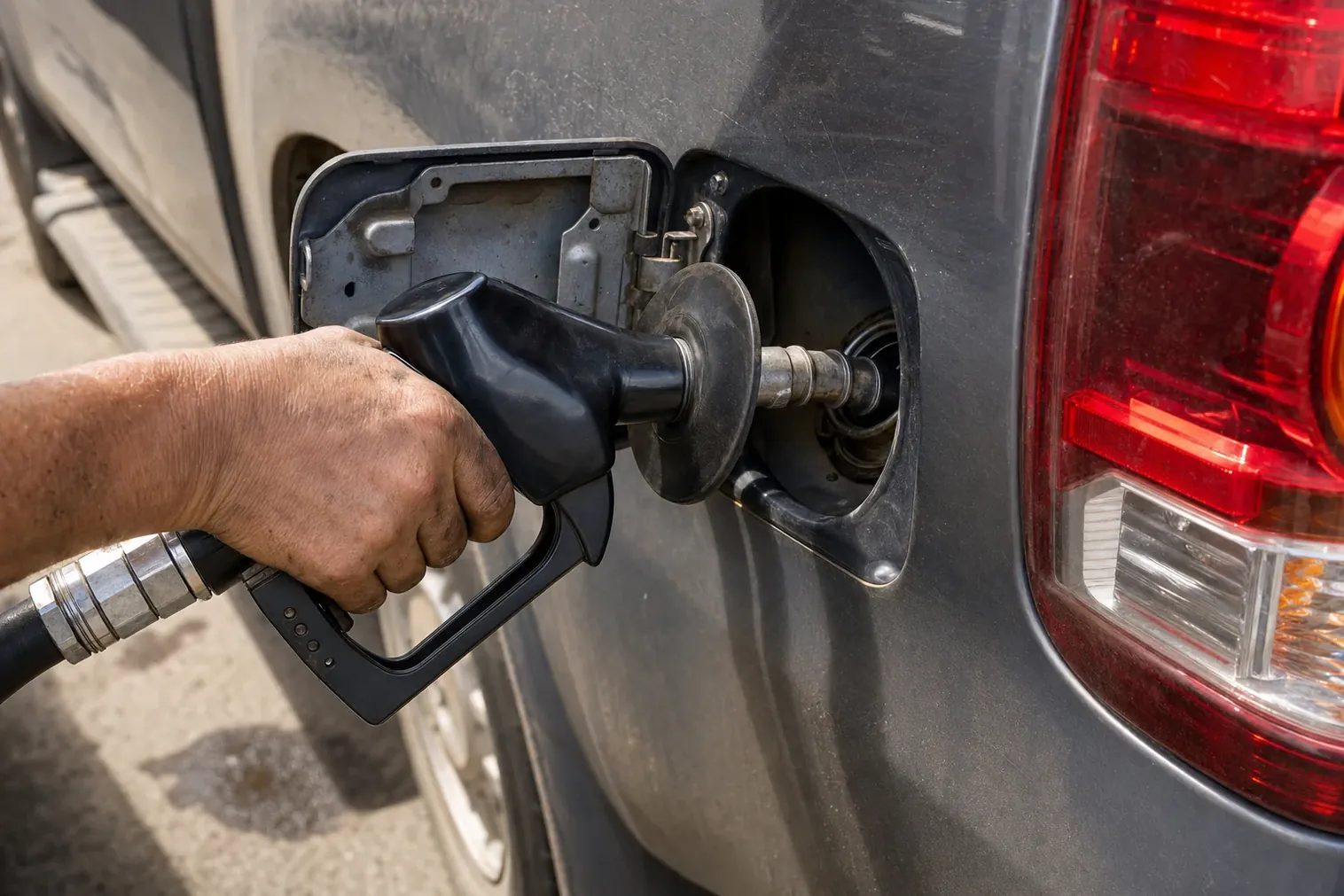
Rising fuel prices increase the cost of owning and operating a vehicle, shift the types of cars people buy, and put immediate pressure on service industries like towing. When the fuel price goes up, everything connected to transport follows.
In the towing industry, fuel isn’t just another expense; it’s one of the highest operational costs we deal with every day. Whether it’s responding to a breakdown on the motorway or transporting a vehicle across town, every job is directly tied to fuel cost. When fuel prices rise, the impact is felt instantly across dispatch, fleet management, pricing, and service delivery.
In this guide, we break down exactly how rising fuel prices affect both the automotive and towing industries, and what it means for you.
What Rising Fuel Prices Mean
Fuel prices don’t just affect what you pay at the pump; they influence how vehicles are bought, maintained, and operated across the board. This section gives you a quick snapshot of the key impacts before we break everything down in detail.
- Rising fuel prices increase the overall cost of vehicle ownership and transport
- Higher fuel costs shift demand toward smaller, more fuel-efficient vehicles
- Automotive manufacturers are affected by fuel price-driven buying trends
- Towing companies experience direct increases in operating costs per job
- Inflation compounds the issue through insurance, labour, and equipment costs
- The result is higher towing fees, tighter margins, and operational pressure
- Rising fuel costs increase prices across industries like mining, construction, and groceries
- Transport and logistics disruptions can slow delivery times and supply chains
- Everyday services become more expensive due to higher operating costs
Why Fuel Prices Have a Wide-Reaching Impact
Fuel prices influence far more than daily driving costs; they shape how industries operate and how goods move across the economy. Understanding this broader impact helps explain why even small increases in fuel prices in Perth can have widespread effects.
How Rising Fuel Prices Affect Industries
Rising fuel prices don’t just impact drivers and towing services; they flow through almost every industry that relies on transport, logistics, and heavy machinery. Here’s how different sectors are affected in real terms.
- Mining – Higher diesel costs increase expenses for heavy equipment, transport trucks, and remote site operations, putting pressure on production costs across Western Australia.
- Groceries & Retail – Transporting food and goods becomes more expensive, which leads to higher prices at supermarkets and local stores.
- Construction – Machinery, material delivery, and site logistics all rely heavily on fuel, increasing project costs and timelines.
- Transport & Logistics – Freight companies face rising delivery costs, which are often passed down to businesses and consumers.
- Agriculture – Farmers pay more for fuel to run machinery, irrigation systems, and transport produce, increasing overall food production costs.
- Trades & Mobile Services – Electricians, plumbers, and mobile mechanics face higher daily operating costs, which can lead to increased service fees.
- Public Transport – Operating costs for buses and other services rise, potentially leading to fare increases or reduced service frequency.

Fuel as a Core Economic Driver
Fuel is one of the few costs that touches almost every part of the economy. From moving goods across the country to getting to work each day, fuel cost sits at the centre of transport, logistics, and service delivery.
When the fuel price rises, it doesn’t just affect motorists; it affects supply chains, repair costs, parts distribution, and even insurance pricing. Businesses that rely on vehicles, including towing operators, immediately feel the pressure because fuel costs are unavoidable and continuous.
In practical terms, every increase in fuel price raises the baseline cost of doing business. For towing companies, that means every kilometre travelled, whether it’s a short urban job or a long-distance tow, becomes more expensive.
Supply and Demand Dynamics Behind Fuel Prices
Fuel prices in Perth are largely driven by global supply and demand, and that’s why they can feel unpredictable.
Demand for fuel tends to stay consistent. People still need to drive, transport goods, and keep businesses running, even when fuel prices climb. That’s what makes rising fuel prices particularly challenging; consumption doesn’t drop enough to offset the increase.
On the supply side, disruptions such as geopolitical tensions, production cuts, or refining constraints can quickly push fuel prices in Perth higher. When that happens, the effects are immediate and widespread.
Recent Fuel Price Trends
Over the past weeks, fuel prices have remained volatile, with noticeable fluctuations driven by global oil supply changes, refinery constraints, and currency movements. In Australia, metro fuel cycles have continued to create sharp price differences within short periods, often rising quickly before gradually easing.
Below is a line graph showing the substantial increase in fuel prices within the past month, as seen from Fuelwatch WA.
In Perth in particular, drivers have seen regular price swings tied to the weekly fuel cycle. Prices can increase by more than 20 to 30 cents per litre within days, directly affecting how much it costs to operate a vehicle week to week. These short-term spikes have a real impact on both personal driving costs and commercial transport operations.
For towing operators, this level of fluctuation creates constant pressure on planning and pricing. Fuel is consumed continuously throughout the day, so even small increases per litre quickly add up across multiple jobs, especially when covering long distances across the metro area.
Another key trend is the upward pressure from global oil markets. Ongoing geopolitical tensions and production decisions by major oil-producing countries have kept wholesale fuel costs elevated. This has limited how much retail fuel prices in Perth can drop, even during lower points in the weekly cycle.
As a result, both drivers and transport-based businesses are operating in an environment where fuel costs are not only higher but also less predictable.
How Rising Fuel Costs Affect the Automotive Industry
Fuel prices play a major role in shaping both consumer behaviour and manufacturer strategy. As fuel cost changes, the entire automotive market adjusts in response.
Changes in Consumer Buying Behaviour
One of the most immediate effects of rising fuel prices is how it changes the way people choose their vehicles.
When the fuel price is low, buyers are generally less concerned about efficiency. Larger vehicles like SUVs and utes become more attractive because the ongoing fuel cost doesn’t feel as significant. Comfort, size, and performance tend to take priority.
But when fuel prices rise, that mindset shifts quickly.
Suddenly, running costs become a major factor in purchasing decisions. Buyers start looking for vehicles that are cheaper to operate day-to-day, which drives demand toward smaller cars, hybrids, and more fuel-efficient models. In markets where fluctuations can be frequent, this shift happens even faster.
From what we see on the ground, this isn’t just a trend, it’s a consistent behavioural pattern. As fuel costs increase, people become far more conscious of long-term expenses, not just the upfront purchase price.
The Shift Towards Electric Vehicles
As fuel prices continue to rise, more drivers are starting to look beyond petrol and diesel altogether. Electric vehicles are becoming a practical alternative, not just for environmental reasons, but for cost savings. The biggest advantage is simple: electricity is generally cheaper and more stable in price compared to fuel. This makes running costs far more predictable, especially for daily drivers or high-mileage users.
There’s also less ongoing maintenance. Charging WA shares that electric vehicles have fewer moving parts, no engine oil, and reduced wear on components like brakes. Over time, this lowers servicing costs and adds to the overall savings.
Because of this, rising fuel prices are accelerating EV adoption. What was once seen as a future option is now becoming a real, immediate solution for many buyers.
For the automotive industry, this shift is significant. Manufacturers are investing heavily in electric models, expanding their EV lineups, and preparing for a long-term transition away from traditional internal combustion engines.
Fuel Costs vs Towing Business Impact
Rising fuel prices don’t operate in isolation. They amplify every other cost involved in running a towing business, from vehicle wear and insurance to labour and equipment. Because fuel is used on every job, it acts as a multiplier across the entire operation.
For towing companies in Perth, this means higher daily running costs, tighter margins, and constant pressure to balance pricing with fast response times. The table below breaks down how fuel costs interact with other key factors and what that means in real-world operations.
| Factor | Impact of Rising Fuel Prices | Effect on the Towing Industry |
|---|---|---|
| Fuel Price | Increases per litre, often fluctuating weekly | Higher cost per kilometre and per job, especially for long-distance tows |
| Vehicle Demand | Shift toward smaller, hybrid, and electric vehicles | Requires updated towing methods, including flatbed transport and EV handling |
| Equipment Costs | Inflation in parts, tyres, and truck maintenance | Higher fleet maintenance costs and more frequent servicing requirements |
| Insurance | Premiums increase alongside repair and replacement costs | Higher fixed overheads regardless of job volume |
| Labour | Wage pressure due to rising cost of living | Increased staffing costs to maintain 24/7 availability and fast response times |
In practical terms, even a small increase in fuel price can add up quickly across multiple jobs in a single day. For example, a 20 to 30 cent increase per litre can significantly raise the cost of accident towing, as the tow truck has to travel to the site of the accident, then to the delivery site of the damaged vehicle, then back to the garage.
That’s why towing providers focus heavily on route optimisation, efficient dispatching, and maintaining fuel-efficient vehicles. The goal is to keep services fast, reliable, and affordable, even as operating costs continue to rise.
The Bigger Picture: Where Fuel Prices Are Taking the Industry
Fuel prices aren’t just fluctuating numbers; they’re shaping the direction of the entire automotive and towing landscape. What we’re seeing now is a structural shift, not a temporary spike.
From the vehicles people choose to drive to the cost of keeping them on the road, rising fuel prices influence decisions at every level.
What makes the current environment different is how fuel costs are stacking with broader inflation. It’s no longer just about paying more at the pump; it’s about the combined effect of higher insurance, equipment, labour, and operating costs all moving in the same direction.
For both drivers and service providers, the takeaway is clear: adapting to rising fuel prices isn’t optional. It’s part of navigating a changing industry where efficiency, experience, and smart operations matter more than ever.